Review Semaphore
Thánh Kinh A4 - Hành Trình Thứ Ba - Third Missionary Trip Paul in Ephesus
Phong Trào 5 - Tinh Thần Ðồng Ðội - Teamwork
Read more!
Showing posts with label Chuyen Mon. Show all posts
Showing posts with label Chuyen Mon. Show all posts
Thursday, August 27, 2009

Week 9: October 11, 2009
Thánh Kinh A3 - Hành Trình Thứ Hai - Second Missionary Trip Paul & Barnabas separated followers of Paul: Silas & Timothy
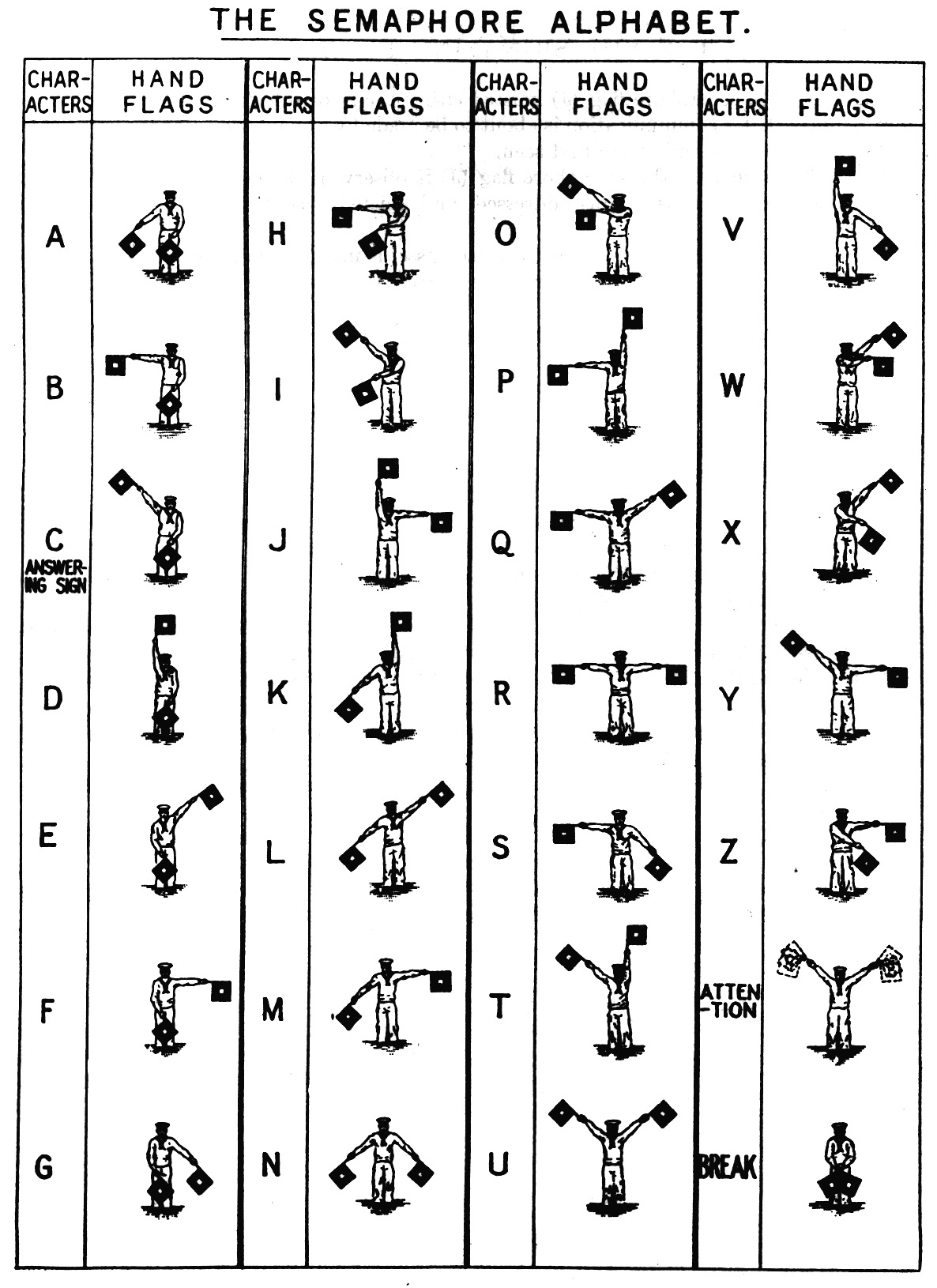
Chuyên Môn - Review Semaphore (link to a chart included below)
click here for a semaphore chart
Second Missionary Trip- Paul & Barnabas separates and Paul is joined by Silas & Timothy
Scripture Reading
Acts 15:36–18:22
"You Athenians, I see that in every respect you are very religious. 23For as I walked around looking carefully at your shrines, I even discovered an altar inscribed, 'To an Unknown God.' What therefore you unknowingly worship, I proclaim to you. 24The God who made the world and all that is in it, the Lord of heaven and earth, does not dwell in sanctuaries made by human hands, 25nor is he served by human hands because he needs anything. Rather it is he who gives to everyone life and breath and everything.
26He made from one the whole human race to dwell on the entire surface of the earth, and he fixed the ordered seasons and the boundaries of their regions, 27so that people might seek God, even perhaps grope for him and find him, though indeed he is not far from any one of us. 28For 'In him we live and move and have our being,' as even some of your poets have said, 'For we too are his offspring.' 29Since therefore we are the offspring of God, we ought not to think that the divinity is like an image fashioned from gold, silver, or stone by human art and imagination. 30
God has overlooked the times of ignorance, but now he demands that all people everywhere repent 31because he has established a day on which he will 'judge the world with justice' through a man he has appointed, and he has provided confirmation for all by raising him from the dead."
Faith / Fact Finding
1. Overview of the journey
The beginning of the second journey is marked by a disagreement between Paul and Barnabas in regards to who would accompany them on their journey. In resolution, Paul and Barnabas go their separate paths. Barnabas took Mark and sailed to Cyprus. Paul, accompanied by Silas traveled through Syria, Cilicia, Derbe and Lystra to revisit the churches that was previously established by Paul in Asia Minor. They traveled through the Phrygian and Galatian territory and then Mysia. They eventually came down to Troas where in a night vision Paul saw a Macedonian asking him to come and help them. Paul concluded from this vision that it was a call from God to proclaim the good news in Macedonia. He accordingly sailed for Europe and preached the Gospel in Philippi, Thessalonica, Beroea, Athens, and Corinth. At the end of the journey, he returned to Antioch by way of Ephesus and Jerusalem.
2. Timothy accompanies Paul on his journey
At the beginning of the second journey they revisit the churches that were started during the first mission. Paul and Silas reached Lystra where they met Timothy, the son of a Jewish woman and Greek father. In an effort to associate with the Jews and gain acceptance to perform ministry among them, Paul convinced Timothy to be circumcised in accordance with the Mosaic laws. (Act 16:1-3) This is a contrast to his teaching as Paul has insisted that these laws cannot be imposed on the Gentiles. Together, they traveled through the Phrygian and Galatian territory. They came to Mysia and down to Troas. In Troas, Paul saw in a night vision a request for him to come to Macedonia.
3. Paul in Philippi
Philippi is a city in the district of Macedonia which is a Roman colony. In Philippi, Paul encountered a slave girl with peculiar power who performed fortune telling to make profit for her owner. She followed and disturbed Paul and his companions with outbursts. Being annoyed by her, he performed exorcism to command the evil spirit to leave her. In reaction to this by the owners and the crowd, Paul and Silas were “dragged to the public square before the local authorities” where they were beaten and imprisoned. The following day they were released and exiled from the city. (Act 16:16-40) Paul and his companion continued their journey through Amphipolis, Apollonia, Thessalonica and finally arrived in Athens.
4. Paul in Athens
In Athens he saw that the city worshipped “unknown gods.” It is here that he delivered a notable speech before a Gentile audience. His speech addresses the divinity responsible for the origin of human existence and creation of the world. He disputes the belief that God is an image of power from materials. In his speech, he declares that God is the ultimate judge of human race, and a day has been established in which he will “judge the world with justice” through a man whom he has resurrected from the dead (Act 17:22-34). From Athens he traveled to Corinth where he spent a year and a half. From Corinth he returned to Antioch by way of Ephesus and Jerusalem.
Case Study / Life Application
1. Paul’s second missionary journey culminates in his notable speech to the Gentiles in Athens where he addressed the idea of an “unknown god.” His speech emphasizes that there is one God who is the origin of all creation, cannot be found in material objects and who is the ultimate judge of human race.
2. In a journey back to his native country of Germany in September 2006, Pope Benedict XVI states in his Sunday sermon that “Put simply, we are no longer able to hear God – there are too many different frequencies filling our ears. What is said about God strikes us as pre-scientific, no longer suited to our age. Social issues and the Gospel are inseparable.” In today’s society, we are often blinded by the “idols” of society. There are computers and spaceships that can travel into space to a destination beyond our comprehension. Technologies have advanced to such a degree that through the method of cloning, life can be artificially replicated. We often view these advancements as vital to our existence.
Paul’s speech to the Gentiles and Pope Benedict XVI reminds us that God is the origin of all things. All “idols” of the world cannot overcome God’s greatness, and in all facets of life, we must maintain faith that God is the ultimate judge of our life. It is only through God that all creations and greatness can be achieved
Where Do You Stand?
1. What are the other “gods” or “idols” in your life that distracts you from praising God?
2. Do you believe that the technologies of today are gearing us away from the teachings of the Bible?
Summary
Paul and Barnabas go their separate paths at the start of the second missionary journey. Paul revisits many of the cities that he had setup churches on his first missionary journey. Paul delivers a notable speech to the Gentiles in Athens regarding God being the origin of creation and the ultimate judgment comes from God and that the day has been determined.
Prayer
Dear God, in Paul’s speech to the Gentiles in Athens, we learn that you are the beginning and the end of all creation. Bless us with the knowledge to live our life in anticipation of a day when we will only be judge by you, our creator. Amen.
Homework
1. Why did Paul and Barnabas separate on the second missionary journey?
2. Why did Paul’s journey lead him to Macedonia?
3. What happened to Paul and Silas in Philippi?
4. What did Paul speak of to the Gentiles in Athens?
Read more!
Chuyên Môn - Review Semaphore (link to a chart included below)
click here for a semaphore chart
Second Missionary Trip- Paul & Barnabas separates and Paul is joined by Silas & Timothy
Scripture Reading
Acts 15:36–18:22
"You Athenians, I see that in every respect you are very religious. 23For as I walked around looking carefully at your shrines, I even discovered an altar inscribed, 'To an Unknown God.' What therefore you unknowingly worship, I proclaim to you. 24The God who made the world and all that is in it, the Lord of heaven and earth, does not dwell in sanctuaries made by human hands, 25nor is he served by human hands because he needs anything. Rather it is he who gives to everyone life and breath and everything.
26He made from one the whole human race to dwell on the entire surface of the earth, and he fixed the ordered seasons and the boundaries of their regions, 27so that people might seek God, even perhaps grope for him and find him, though indeed he is not far from any one of us. 28For 'In him we live and move and have our being,' as even some of your poets have said, 'For we too are his offspring.' 29Since therefore we are the offspring of God, we ought not to think that the divinity is like an image fashioned from gold, silver, or stone by human art and imagination. 30
God has overlooked the times of ignorance, but now he demands that all people everywhere repent 31because he has established a day on which he will 'judge the world with justice' through a man he has appointed, and he has provided confirmation for all by raising him from the dead."
Faith / Fact Finding
1. Overview of the journey
The beginning of the second journey is marked by a disagreement between Paul and Barnabas in regards to who would accompany them on their journey. In resolution, Paul and Barnabas go their separate paths. Barnabas took Mark and sailed to Cyprus. Paul, accompanied by Silas traveled through Syria, Cilicia, Derbe and Lystra to revisit the churches that was previously established by Paul in Asia Minor. They traveled through the Phrygian and Galatian territory and then Mysia. They eventually came down to Troas where in a night vision Paul saw a Macedonian asking him to come and help them. Paul concluded from this vision that it was a call from God to proclaim the good news in Macedonia. He accordingly sailed for Europe and preached the Gospel in Philippi, Thessalonica, Beroea, Athens, and Corinth. At the end of the journey, he returned to Antioch by way of Ephesus and Jerusalem.
2. Timothy accompanies Paul on his journey
At the beginning of the second journey they revisit the churches that were started during the first mission. Paul and Silas reached Lystra where they met Timothy, the son of a Jewish woman and Greek father. In an effort to associate with the Jews and gain acceptance to perform ministry among them, Paul convinced Timothy to be circumcised in accordance with the Mosaic laws. (Act 16:1-3) This is a contrast to his teaching as Paul has insisted that these laws cannot be imposed on the Gentiles. Together, they traveled through the Phrygian and Galatian territory. They came to Mysia and down to Troas. In Troas, Paul saw in a night vision a request for him to come to Macedonia.
3. Paul in Philippi
Philippi is a city in the district of Macedonia which is a Roman colony. In Philippi, Paul encountered a slave girl with peculiar power who performed fortune telling to make profit for her owner. She followed and disturbed Paul and his companions with outbursts. Being annoyed by her, he performed exorcism to command the evil spirit to leave her. In reaction to this by the owners and the crowd, Paul and Silas were “dragged to the public square before the local authorities” where they were beaten and imprisoned. The following day they were released and exiled from the city. (Act 16:16-40) Paul and his companion continued their journey through Amphipolis, Apollonia, Thessalonica and finally arrived in Athens.
4. Paul in Athens
In Athens he saw that the city worshipped “unknown gods.” It is here that he delivered a notable speech before a Gentile audience. His speech addresses the divinity responsible for the origin of human existence and creation of the world. He disputes the belief that God is an image of power from materials. In his speech, he declares that God is the ultimate judge of human race, and a day has been established in which he will “judge the world with justice” through a man whom he has resurrected from the dead (Act 17:22-34). From Athens he traveled to Corinth where he spent a year and a half. From Corinth he returned to Antioch by way of Ephesus and Jerusalem.
Case Study / Life Application
1. Paul’s second missionary journey culminates in his notable speech to the Gentiles in Athens where he addressed the idea of an “unknown god.” His speech emphasizes that there is one God who is the origin of all creation, cannot be found in material objects and who is the ultimate judge of human race.
2. In a journey back to his native country of Germany in September 2006, Pope Benedict XVI states in his Sunday sermon that “Put simply, we are no longer able to hear God – there are too many different frequencies filling our ears. What is said about God strikes us as pre-scientific, no longer suited to our age. Social issues and the Gospel are inseparable.” In today’s society, we are often blinded by the “idols” of society. There are computers and spaceships that can travel into space to a destination beyond our comprehension. Technologies have advanced to such a degree that through the method of cloning, life can be artificially replicated. We often view these advancements as vital to our existence.
Paul’s speech to the Gentiles and Pope Benedict XVI reminds us that God is the origin of all things. All “idols” of the world cannot overcome God’s greatness, and in all facets of life, we must maintain faith that God is the ultimate judge of our life. It is only through God that all creations and greatness can be achieved
Where Do You Stand?
1. What are the other “gods” or “idols” in your life that distracts you from praising God?
2. Do you believe that the technologies of today are gearing us away from the teachings of the Bible?
Summary
Paul and Barnabas go their separate paths at the start of the second missionary journey. Paul revisits many of the cities that he had setup churches on his first missionary journey. Paul delivers a notable speech to the Gentiles in Athens regarding God being the origin of creation and the ultimate judgment comes from God and that the day has been determined.
Prayer
Dear God, in Paul’s speech to the Gentiles in Athens, we learn that you are the beginning and the end of all creation. Bless us with the knowledge to live our life in anticipation of a day when we will only be judge by you, our creator. Amen.
Homework
1. Why did Paul and Barnabas separate on the second missionary journey?
2. Why did Paul’s journey lead him to Macedonia?
3. What happened to Paul and Silas in Philippi?
4. What did Paul speak of to the Gentiles in Athens?
Read more!
Wednesday, August 19, 2009
Week 7: September 27, 2009
Chuyen Mon Review: Morse
Morse Game
Thanh Kinh A2: Thanh Phaolo o Corinto
Midterm Review
Paul in Corinth
Scripture Reading
Acts 18:1-23
“One night in a vision the Lord said to Paul, ‘Do not be afraid. Go on speaking, and do not be silent, for I am with you. No one will attack and harm you, for I have many people in this city.’ He settled there for a year and a half and taught the word of God among them.”
Faith / Fact Finding
1. Paul in Corinth
Paul left Athens and went to Corinth where he was joined by Silas and Timothy who came down from Macedonia. In Corinth, he met Aquila and his wife Priscilla. Aquila and Priscilla were natives of Pontus, and had recently come from Italy as Emperor Claudius expelled the Jews from Rome. During his time in Corinth, he stayed and worked with them as tentmakers for he practiced this same (Acts 18:3-4).
On every Sabbath day, he would preach in the synagogue to the Jews that the Messiah was Jesus. He eventually encountered violent oppositions from the Jews (Acts 18:5-6). Faced with this opposition, he proceeded to the house of Titus Justus who worshiped God and his house was next to a synagogue. He continued to preach here when he met Crispus, who came to believe in God and was among the few that Paul baptized (Acts 18:8). Paul stayed in Corinth for a year and a half to teach the word of God to the people of Corinth (Acts 18:11).
2. Accusations before Gallio
The Jews rose up against Paul and brought him to trial in front of Gallio, the proconsul of Achaia. The Jews accused Paul of teaching people to worship God in contrary to the law (Acts 18:12-13).
Paul was not given the chance to reply to this charge, but instead Gallio spoke to the Jews and dismissed the charge against him.
After the accusation, Paul remained in Corinth for some time before he sailed to Syria.
Case Study / Life Application
Saint Clement Maria Hofbauer was a Redemptorist preacher and reformer. He was apprenticed as a baker in his youth, and later became a hermit near Bruck, Austria. Austrian Emperor Jo¬seph II later abolished hermitages, and Clement went to Vienna, where he received permission from Bishop Chiaramonti of Tivoli, Italy to live in a hermitage. After studying at the University of Vienna, Austria, and in Rome, Clement and entered the Redemptorist Order and was ordained in 1785. He was then stationed in Vienna, but Emperor Joseph II closed religious foundations, so he was sent to Courtland. Clement was joined by a lay brother, and was sent to St. Benno’s Church in Warsaw, Poland to begin two decades of missionary labors. Clement preached, built orphanages, schools, and established a vast Redemptorist presence in the city. During the reign of Napoleon, he suppressed all religious institutions so Clement and the Redemptorists were imprisoned in 1808. After being exiled, Clement went to Vienna where he became the chaplain of the Ursulines and pastor of the adjoining parish. He became known for his holiness and zeal. He founded a Catholic college and began to reform and revitalized the Catholic faith of Austria and Germany. Prince Rupert of Bavaria aided Clement in defeating a move to establish a German national Church. Clement also fought against Josephinism and was about to be expelled from Austria for his opposition to such secular control, when surprisingly, Emperor Joseph’s successor, Emperor Francis I, defended him. Clement died in Vienna on March 15. He was canonized in 1909.
Saint Clement maintained his faith in God through his work his entire life. When faced with challenges of being expelled from Austria by the opposition in power of Emperor Joseph, he was vindicated by the successor Emperor Francis I. Similar to the life of Saint Clement, Paul was also vindicated by Gallio when the Jews opposed his teachings.
The lives of these two saints exemplify their faith in God’s work as they strive to spread the word of the Lord. As Catholics, we need to instill our faith in God as we endeavor to spread the good news to others.
Where Do You Stand?
1. Often in the Bible we encounter passages where God tells us not to be afraid and that he will always be with us. Is your faith strong enough to not be afraid of rejections as you speak of God to others?
2. Religion is mainly based on faith. Do you believe in everything that is taught to you and everything that you are asked to preach to others?
Summary
From Athens, Paul comes to Corinth where he meets up with Silas and Timothy. He spends a year and a half preaching in Corinth and staying with tentmakers Aquila and Priscilla.
While preaching in the synagogues, the Jews rejected his teachings, which turned him to preach to the Gentiles. The Jews tried to bring accusations against him before Gallio, the proconsul of Achaia. These accusations against him were dismissed by Gallio. He remained in Corinth for a while before sailing to Syria.
Prayer
Dear God, strengthen my faith in you to know that whenever I speak of your name, I am assured that you are always there in my support. Amen.
Homework
1. Who was Paul joined by in Corinth?
2. Who did Paul stay with in Corinth?
3. What trade work did Paul perform in Corinth?
4. What did the Jews accused Paul of, and who did they bring him before to make this accusation?
5. How long did Paul remain in Corinth?
Read more!
Morse Game
Thanh Kinh A2: Thanh Phaolo o Corinto
Midterm Review
Paul in Corinth
Scripture Reading
Acts 18:1-23
“One night in a vision the Lord said to Paul, ‘Do not be afraid. Go on speaking, and do not be silent, for I am with you. No one will attack and harm you, for I have many people in this city.’ He settled there for a year and a half and taught the word of God among them.”
Faith / Fact Finding
1. Paul in Corinth
Paul left Athens and went to Corinth where he was joined by Silas and Timothy who came down from Macedonia. In Corinth, he met Aquila and his wife Priscilla. Aquila and Priscilla were natives of Pontus, and had recently come from Italy as Emperor Claudius expelled the Jews from Rome. During his time in Corinth, he stayed and worked with them as tentmakers for he practiced this same (Acts 18:3-4).
On every Sabbath day, he would preach in the synagogue to the Jews that the Messiah was Jesus. He eventually encountered violent oppositions from the Jews (Acts 18:5-6). Faced with this opposition, he proceeded to the house of Titus Justus who worshiped God and his house was next to a synagogue. He continued to preach here when he met Crispus, who came to believe in God and was among the few that Paul baptized (Acts 18:8). Paul stayed in Corinth for a year and a half to teach the word of God to the people of Corinth (Acts 18:11).
2. Accusations before Gallio
The Jews rose up against Paul and brought him to trial in front of Gallio, the proconsul of Achaia. The Jews accused Paul of teaching people to worship God in contrary to the law (Acts 18:12-13).
Paul was not given the chance to reply to this charge, but instead Gallio spoke to the Jews and dismissed the charge against him.
After the accusation, Paul remained in Corinth for some time before he sailed to Syria.
Case Study / Life Application
Saint Clement Maria Hofbauer was a Redemptorist preacher and reformer. He was apprenticed as a baker in his youth, and later became a hermit near Bruck, Austria. Austrian Emperor Jo¬seph II later abolished hermitages, and Clement went to Vienna, where he received permission from Bishop Chiaramonti of Tivoli, Italy to live in a hermitage. After studying at the University of Vienna, Austria, and in Rome, Clement and entered the Redemptorist Order and was ordained in 1785. He was then stationed in Vienna, but Emperor Joseph II closed religious foundations, so he was sent to Courtland. Clement was joined by a lay brother, and was sent to St. Benno’s Church in Warsaw, Poland to begin two decades of missionary labors. Clement preached, built orphanages, schools, and established a vast Redemptorist presence in the city. During the reign of Napoleon, he suppressed all religious institutions so Clement and the Redemptorists were imprisoned in 1808. After being exiled, Clement went to Vienna where he became the chaplain of the Ursulines and pastor of the adjoining parish. He became known for his holiness and zeal. He founded a Catholic college and began to reform and revitalized the Catholic faith of Austria and Germany. Prince Rupert of Bavaria aided Clement in defeating a move to establish a German national Church. Clement also fought against Josephinism and was about to be expelled from Austria for his opposition to such secular control, when surprisingly, Emperor Joseph’s successor, Emperor Francis I, defended him. Clement died in Vienna on March 15. He was canonized in 1909.
Saint Clement maintained his faith in God through his work his entire life. When faced with challenges of being expelled from Austria by the opposition in power of Emperor Joseph, he was vindicated by the successor Emperor Francis I. Similar to the life of Saint Clement, Paul was also vindicated by Gallio when the Jews opposed his teachings.
The lives of these two saints exemplify their faith in God’s work as they strive to spread the word of the Lord. As Catholics, we need to instill our faith in God as we endeavor to spread the good news to others.
Where Do You Stand?
1. Often in the Bible we encounter passages where God tells us not to be afraid and that he will always be with us. Is your faith strong enough to not be afraid of rejections as you speak of God to others?
2. Religion is mainly based on faith. Do you believe in everything that is taught to you and everything that you are asked to preach to others?
Summary
From Athens, Paul comes to Corinth where he meets up with Silas and Timothy. He spends a year and a half preaching in Corinth and staying with tentmakers Aquila and Priscilla.
While preaching in the synagogues, the Jews rejected his teachings, which turned him to preach to the Gentiles. The Jews tried to bring accusations against him before Gallio, the proconsul of Achaia. These accusations against him were dismissed by Gallio. He remained in Corinth for a while before sailing to Syria.
Prayer
Dear God, strengthen my faith in you to know that whenever I speak of your name, I am assured that you are always there in my support. Amen.
Homework
1. Who was Paul joined by in Corinth?
2. Who did Paul stay with in Corinth?
3. What trade work did Paul perform in Corinth?
4. What did the Jews accused Paul of, and who did they bring him before to make this accusation?
5. How long did Paul remain in Corinth?
Read more!
Subscribe to:
Posts (Atom)